Māori Grammar
| Previous | Back | Next |
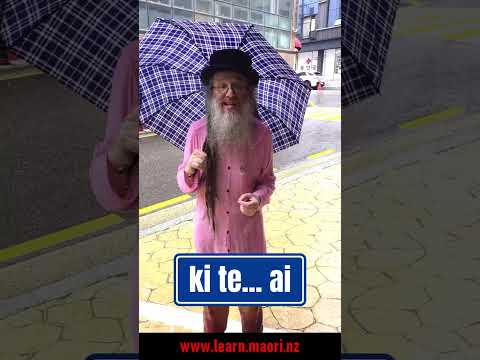
The particle ai has a variety of uses and meanings, including habitual action (waiata ai ia, "she always sings").
One important use of ai is related to purpose or reason for something.
In te reo Māori, the question "why" is asked with he aha ai? (literally: "what is the reason?")
Ai as the reason for an action is also seen in the structure kia...ai:
I haere ahau ki te kāinga kia moe ai ahau.
I went home to sleep.
I taraiwa a Rangi ki te hokomaha kia hoko kai ai ia.
Rangi drove to the supermarket to buy food.
I pānui a Mere i te pukapuka kia ako ai ia i te reo Māori.
Mere read the book to learn Māori.
These use kia ... ai: the first action is done so that / in order that the second action can occur.
Ai related to the reason for an action also appears in the sentence structure:
Nā + reason + subject + i + verb + ai
For example:
Nā te ngenge ahau i hoki ai ki te kāinga.
I went home because I was tired.
Nā te pakarutanga o te pahi i tūreiti ai au.
I am late because of the breakdown of the bus.
In the future, mā... e... ai is used:
Mā te ngenge ahau e hoki ai ki te kāinga.
I will go home because I will be tired.
Mā te pakarutanga o te pahi e tūreiti ai au.
I will be late because of the breakdown of the bus.
An extended "why" question can be asked with he aha... i... ai?, he aha... e... nei? and he aha... e... ai?
He aha ai?
Why?
He aha koe i haere ai?
Why did you go?
He aha koe e haere nei?
Why are you going?
He aha koe e haere ai?
Why will you go?
These questions are typically answered with:
He + reason + nō/nā + person/thing.
For example:
He aha rātou i kata ai?
Why did they laugh?
He harikoa nō rātou.
Because they were happy.
Nā te makariri rāua i hoki ai.
They returned because of the cold.I haere au ki te pāka hikoi ai.
I went to the park to walk.Hoki mai ki te kāinga kirihimete ai.
Come back home for Christmas.E noho ki runga i tōu tūru ka kai ai.
Sit on your chair in order to eat.Ka haere au ki Ōhope whakatā ai.
I go to Ōhope in order to relax.Haere atu ki te wharekai kai ai.
Go to the wharekai to eat.Ka haere au ki te toa hoko tītī ai.
I will go to the shop to buy muttonbird.I haere mātou ki te marae karakia ai.
We went to the marae to pray.Ka haere māua ko Aroha ki te hokomaha tiki ai.
Aroha and I are going to the supermarket to shop.Kia tūruki whakataha ai.
In order to return to everyday activities.I haere ngā tamariki ki te moana kauhoe ai.
The children went to the ocean in order to swam.Engari i mua i te haere ki te mahi, i hoki au ki te kāinga tīni kākahu ai.
But before going to work, I returned home to change clothes.I tērā Rāhoroi, i haere rātou ki tātahi kohi pipi a.
On Saturday, they went to the beach to gather pipi.Haere mai ki konei noho ai.
Come over here to sit down.I haere au ki te kura ako ai.
I went to the school to learn.I haere au ki ngā toa hoko kai ai.
I went to the shops to buy food.I noho mātou whakaronga ai ki a ia.
We stayed to listen to her.Kua utaina ngā matau me te aho e ia ki runga i te waka kia hī ika ai.
The fish hooks and fishing line were loaded by him onto the waka in order to fish.Haere atu ki kō waiata ai.
Go over there to sing.Ka hui rātou āpōpō kōrero ai mō te wharenui.
They will meet tomorrow to discuss the wharenui.I haere au ki te toa hoko kai ai.
I am going to the ship in order to buy food.