Māori Grammar
| Previous | Back | Next |
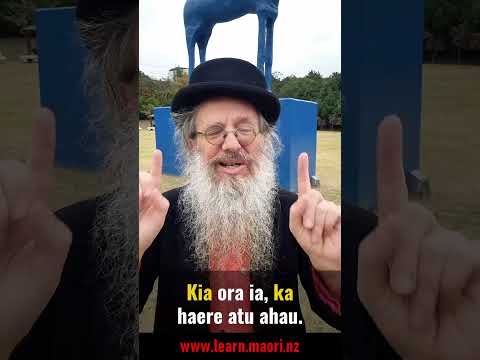
One use of kia is to express a desired or wished-for state.
Kia ora!
Be well! / May you be well! / Greetings!
Kia kaha!
May you be strong!
We can also say this about someone else:
Kia ora ia.
May he be well.
Again, kia + a state: may that state come about.
Kia can also be used with ka to talk about when that state is achieved.
Kia ora ia, ka haere atu ahau.
When/once he is well, I will go.
This is not wishing that he be well; it is setting his being well as a state that must be realised before the following event occurs: once he is well → I will go.
Kia can introduce a situation that has not yet been realised, but which is expected or envisaged. The second event happens once that first situation is realised.
Kia oti te mahi, ka hoki au ki te kāinga.
When the work is finished, I'll go home.
Kia tae mai ia, ka kai tātou.
When/once he arrives, we'll eat.
Kia mutu te ua, ka haere ai tāua.
When the rain stops, then we'll go.
The structure also often appears as kia... ka... ai...:
Kia ua, ka oma ai a Mere ki waho ki te tiki i ngā kākahu.
Whenever it rains, Mere runs outside to get the clothes.
Kia haere au ki Ōtaki, ka toro atu ai au ki taku hoa.
Whenever I go to Ōtaki, I visit my friend.
Kia can introduce either a particular anticipated event — “when/once X happens” — or a recurring situation — “whenever X happens.” Context and the main clause tell us which interpretation is intended.
Kia ua, ka oma a Mere ki waho ki te tiki i ngā kākahu.
Whenever it rains, Mere runs outside to get the clothes.
Kia hāmama tētahi ki a Mere, ka tangi ia.
Whenever someone yells at Mere, she cries.
Kia tae mai ngā mokopuna, ka tunu keke a Kui.
Whenever the grandchildren arrive, Kui bakes a cake.
Kia māuiui ia, ka noho ia ki te kāinga.
Whenever he is sick, he stays at home.
Kia makariri te rangi, ka tahu mātou i te ahi.
Whenever the weather is cold, we light the fire.
Kia kite ia i tana kurī, ka kata ia.
Whenever she sees her dog, she smiles.
There is a variation on kia... ka... which makes the endopoint explicit with the addition of rā anō:
Kia mutu rā anō te ua, ka haere tāua.
Only when the rain stops will we go. / We won't go until the rain stops.
Thus kia ... rā anō... ka can have the force of “not until / only when”.
For example, compare:
Kia tae mai a Rangi, ka tīmata te hui.
When Rangi arrives, the meeting will start.
versus:
Kia tae mai rā anō a Rangi, ka tīmata te hui.
Not until Rangi arrives will the meeting start.
Kia oti rā anō ngā mahi, ka hoki ngā kaimahi ki te kāinga.
The workers won't go home until the work is finished.
Kia pakeke rā anō ngā tamariki, ka mārama rātou.
Only when the children are older will they understand.
Kia whiwhi rā anō au i te moni, ka hoko au i te motokā.
I won't buy the car until I get the money.
Kia kite rā anō au i a ia, ka whakapono au.
I won't believe it until I see him/her.
Kia hoki mai rā anō a Mere, ka kai tātou.
We won't eat until Mere comes back.
A related structure uses ka... ka... and has a similar meaning:
Ka mutu te ua, ka haere tāua.
When the rain stops, we'll go. / If the rain stop, then we'll go.
Ka tae mai a Rangi, ka kai tātou.
When Rangi arrives, we'll eat.
The meaning is closely, related, but while ka... ka... narrates a sequence of events (the rain will stop, we will go out), kia... ka... indicates that the second action is dependent upon the first (we are waiting for the rain to stop and then we will go out). This is similar to the difference between kātahi ka and ka... ai.
There is an alternative structure that uses ina... me... instead of kia... ka...:
Ina kite koe i a ia, me mihi.
When you see her, say hello from me.
Ka mutu tō mahi, ka mohi mau au.
When your work is finished, I will return.Ka hoki mai ia, ka kai tātou.
When he gets back, we will eat.Ka mutu tāt tāau mahi, ka whakatā tātou.
When our work is finished, we will relax.Ka mao te ua, ka whiti mai te rā.
When the rain stops, the sun will shine.Kia mutu taku hui, ka waea atu ia ki a koe.
When I finish my meeting, I will call you.Kia wātea mai koe, ka hui tāua.
When you are free, we will catch up.Kia tae mai a Honi, ka peka atu tātau ki te kāinga o Ataahua.
When Honi arrives, we will stop by Ataahua's house.Ka mutu te hui, ka haere māua ki te tāone.
When the meeting is over, we will go to town.